Category: Artificial Intelligence

  • The #1 Skill You Need Today to Leverage AI Is Data Knowledge

    The #1 Skill You Need Today to Leverage AI Is Data Knowledge

    Introduction: Why Does Data Matter Before AI?

    Our world today is buzzing about AI. Everywhere we look, AI is there, and everyone from heads of state to billionaire CEOs is telling us that artificial intelligence is the most important innovation humans have ever developed. While I am still skeptical about labeling it the most important innovation we’ve ever developed (we’ve made some pretty awesome things!), I would agree that it is undeniably a powerful tool that is beginning to change how we live and work and even how we interact with each other.

    The problem is that many often skip a crucial step: understanding how AI systems actually work and what they are doing behind the scenes to produce the answers to our prompts.

    AI runs because of our data.

    Everything revolves around the data the models are trained on. That data determines the accuracy of the model and even the “personality” it begins to take on. This is why the #1 skill you need today to leverage AI is data knowledge, you need to understand how data works and how it will continue to shape the future.

    For years, people have been saying that data is the new gold, and over the past few decades we’ve witnessed a quiet digital gold rush. Companies began figuring out ways to store massive amounts of data and developed strategies to collect it from nearly everywhere they could imagine. In many cases, they started collecting data long before they knew exactly how they would use it.

    Companies began monitoring everything they could control.

    Think about how much data you generate in a single day. Every website you visit stores a log of your activity. Most modern vehicles monitor everything from outside temperature and acceleration to GPS location, along with countless other bits and bytes of information. That data is often not stored locally on the device or vehicle. Instead, it is uploaded to cloud servers where it becomes the property of the company that collected it (Hello Tesla!).

    Of course, this is typically spelled out in the terms and conditions we all agree to. The problem is that most of us simply skip over those documents and click “accept”, because let’s face it if we tried to read every word of every agreement tied to the technologies we use, we would never get anything done.

    Data Is the Fuel That Powers AI

    Think of data as fuel. Without it, AI is just an engine sitting there doing nothing.

    Data gives AI models context and a window into the world. It teaches machines how languages work, how we communicate, and even what ideas or behaviors are popular. By synthesizing massive amounts of information far more than any person could process in a lifetime, AI systems begin to recognize patterns and generate responses that appear to be intelligent. In reality, these models are not “thinking”. AI is simply performing complex mathematical calculations to determine what output is most likely to come next. Interestingly enough, that may not be entirely different from how our own brains function. We know that we humans constantly draw on past experiences, knowledge, and context when deciding what to say or do next. The difference is that we also incorporate emotion, intuition, and our senses when making decisions. AI does not have those advantages.

    This is why understanding data becomes so important. It is the only gateway into our world that AI has. Once you begin to understand this and how data is feeding AI systems, the technology becomes far less mysterious, and you start to gain more control over how you use it.

    First, we need to take a step back and ask a basic question: What is data?

    Data is not a mysterious far fetch technical concept. In fact, it has existed for as long as humans have. Before we began to record it, we passed it down person to person through storytelling and drawings, later we advanced to writing. At its core, data is simply information. It can take the form of numbers, text, images, we used these to memorialize observations, and records of past events. What makes data powerful is when it is stored, organized, and analyzed it can help guide future decisions. This is why the development of written records was such a transformative moment in human history. Once people began recording events, they could analyze past experiences that they might not have personally had. This was an instant advantage as people could now identify patterns and learn from the experiences of others who they did not personally know.

    Early societies often used recorded information to track planting schedules or understand seasonal patterns. Have you ever heard of a 100 year flood? Over time, however, that information expanded into commerce, science, governance, and education. In many ways, data became the foundation of civilization and everything we know of today.

    Without recorded information, every generation would be forced to rediscover the same lessons over and over again. Innovation would slow dramatically because knowledge would constantly be lost and have to be rediscovered.

    Now that you understand that data is simply recorded knowledge, AI becomes much easier to breakdown. It is systems designed to analyze enormous collections of information and identify patterns within them.

    How Data Powers AI

    At this point, it should be clear that AI is not magic.

    It’s just a lot of math.

    AI systems analyze enormous quantities of data and identify patterns faster than any human ever could. Because of this it seems to us as if it is intelligent. Based on those patterns, the AI system will generate responses.

    When you break it down this way, it may initially feel a bit unsettling. But the reality is that humans operate in a somewhat similar way. Our brains constantly analyze past experiences and stored knowledge when determining how to respond to new situations.

    This is precisely why we developed schools. Education systems pass knowledge from one generation to the next. Just like we upload information from one computer to another in school we are uploading information from the teacher and books over to the students. This allows people to analyze and apply insights without having personally experienced every scenario themselves.

    AI works in a similar way it just does it in a much larger scale and shorter timeline. It again is learning by analyzing patterns in large datasets.

    This is where one critical principle comes into play: Everything depends on the quality of the data. Data professionals and nerds have repeated the same phrase for decades: Garbage in, garbage out. If you train a system using poor-quality or misleading data, the results will be poor as well.

    AI systems, like human children, learn by observing the information around them. If they are exposed to incorrect or misleading information, they will treat that information as truth because they have no other frame of reference.

    Let’s imagine a hypothetical scenario.

    Assume there is a remote town isolated from the outside world. This town has no internet connection, no roads connecting it to other communities, and no interaction with outsiders. Their only form of communication is spoken language.

    One of the town elders begins telling stories that if you place two apples in a basket, the basket should now be called a basket of bananas. Over time, that definition becomes accepted truth in the town. It is passed down from generation to generation. Within their context, that information would be considered correct. However, in the broader world, we know that definition is wrong. If this incorrect information were introduced into an AI dataset, the AI would be trained on an incorrect assumption which would generate bad data, that would inevitably begin to produce incorrect results.

    This simple example highlights why context, definitions, and data accuracy matter so much and it also illustrates the importance of reviewing how models are trained on a regular basis.

    Key Data Concepts Everyone Should Know

    To effectively work with AI, there are several foundational data concepts that everyone should understand.

    Structured vs. Unstructured Data

    Structured data is neatly organized, typically in rows and columns. It includes clearly defined labels that explain what each piece of information represents.

    Unstructured data, on the other hand, includes things like emails, images, audio files, and text documents. This type of data requires additional tools such as natural language processing to interpret and categorize it.

    To dive deeper and to learn more about structured vs. unstructured data check out this IBM article.

    Data Quality

    As mentioned earlier, poor-quality data leads to poor results. Ensuring that data is accurate, complete, and well-organized dramatically improves the reliability of AI outputs.

    Data Storage

    Individuals often store information using cloud platforms like Google Drive or Dropbox. Businesses, however, typically rely on large-scale storage systems known as data warehouses, such as BigQuery or Snowflake. Think of this as the difference between storing files on your personal computer versus renting space in a massive digital storage facility. (I highly recommend you take a deeper dive into what is cloud storage)

    Regardless of where the information lives, the key point remains the same: data must be stored somewhere before it can be analyzed.

    How to Begin Building Data Literacy

    The good news is that you do not need to be a data scientist or hold an advanced degree to begin developing data literacy. You simply need curiosity and a willingness to make mistakes along the way. Start with some small steps. Begin paying attention to the data used in your daily work and life. Ask where it comes from and how it’s being stored. Identify patterns and understand how it was collected.

    Once you become more comfortable, start to think about how that data could be used. At that point, begin experimenting with AI systems. Start by asking your preferred AI model questions, you already know the answers too. This will help you validate whether the system is interpreting the data correctly. Once you feel comfortable that the system is reviewing the data correctly. Start requesting simple analyses based on that data. Pay attention to how the model responds and how it reaches its conclusions. At this stage, you are no longer simply using AI you are collaborating with it.

    Unlocking AI’s True Potential

    Once you understand the data available to you, where it comes from, and how it is structured, you can begin taking the next step: augmenting your abilities with AI. By this point you are pulling ahead of most others around you, this is where the possibilities start to become exciting. By connecting data sources to AI-powered analytics tools, you can begin generating insights at a scale that would have been impossible just a few years ago and without advanced training. Instead of manually searching for patterns, you can ask AI to identify trends, summarize findings, and propose areas for deeper exploration.

    The key is to remain thoughtful and deliberate. Do not simply accept the first idea the AI produces. Use it as a starting point for brainstorming and refinement. Always start small. Build confidence in the process before expanding its use.

    Conclusion: The Foundation of a Future-Proof Career

    Becoming future-proof in your career starts with understanding the most basic building block of modern technology: data. AI comes next.

    Data is the foundation. By understanding and mastering it, you will begin to position yourself not only to leverage AI effectively, but also to lead teams who will add true value, guide strategically, and deliver meaningful results in an increasingly data-driven world.

    In the end those who understand how to leverage data will not simply be seen as consumers of technology but rather those who can shape it.
  • The Creative Edge in an AI-Driven World

    The Creative Edge in an AI-Driven World

    Understanding the creative edge in an AI-driven world, I spend a significant amount of time writing, reading, and speaking about generative AI and the potential it holds for humanity. I truly believe that this technology can help us become more creative, more productive, and ultimately better at the things we care about most. We are standing at the edge of a new way of getting things done. For the first time in history, we have tools that can augment our thinking, accelerate our workflows, and assist us in bringing ideas to life at unprecedented speed.

    However, while I am deeply optimistic about AI as a tool for human advancement, it is becoming increasingly clear that many organizations and leaders are moving in a different direction. Instead of asking how AI can empower people, they are asking how it can replace them. That distinction matters more than most realize. It is what we do today that will have the greatest impact on how we live tomorrow.

    There certainly are tasks AI should handle completely. They are the repetitive ones. The monotonous. The activities that drain our energy and offer little opportunity for growth. Many of us have spent years in roles where large portions of our time were consumed by formatting spreadsheets, cleaning data, summarizing reports, or performing procedural work that, while necessary, did not allow us to think deeply or creatively. AI is exceptionally well suited for those kinds of responsibilities. It does not tire. It does not become bored. It does not crave stimulation. It can handle structure and repetition with remarkable consistency.

    That is where the real opportunity lies.

    If we allow AI to take on the mundane, we free ourselves to focus on the meaningful. We reclaim mental bandwidth. We create space for creativity, strategy, connection, and innovation. Instead of being buried in tasks that “suck the life out of us,” we can redirect our attention toward solving complex problems, imagining all the new possibilities, being able to build things that genuinely move the world forward.

    And yet, even with all the potential this shift is proving to be difficult. Why?

    Humans are creatures of habit. We are wired for stability and familiarity. When something new enters our environment especially something as powerful and disruptive as generative AI, the instinctive reaction is often resistance. We question it. We avoid it. We downplay it. Throughout much of human history, that instinct served us well. Caution and consistency were essential for survival. Venturing too far into the unknown could mean real danger.

    But we are no longer living in a world where our primary threats are physical. We are not running from predators. We are navigating a rapidly evolving digital ecosystem. In this environment, the ability to explore the unknown is not a liability; it is an advantage.

    Some people are naturally wired to chase what others run from. They are curious about emerging technologies. They are comfortable experimenting without having all the answers. They are willing to look foolish in the short term to understand something deeper in the long term. In previous eras, that kind of boldness may not have always been rewarded. But today, it is essential.

    Comfort in the mundane is no longer a sustainable strategy. Consistency in the known is no longer sufficient. Technology is evolving around the clock, and the individuals and organizations that will thrive are those willing to evolve alongside it.

    If you are someone who tends to question the status quo, who enjoys thinking differently, who finds energy in experimentation rather than exhaustion in it, you are already positioned well for what comes next. The next several years will not simply reward technical competence; they will reward adaptability, creative thinking, and the ability to integrate new tools into meaningful work.

    One of the developments that has begun to capture attention recently is something often referred to as “agentic AI.” Many people have heard the term, but far fewer understand what it represents. In simple terms, agentic AI moves beyond chat-based interaction and toward systems that can take action within defined parameters. Instead of merely responding to prompts, these systems can execute workflows, coordinate between tools, and pursue defined objectives with a degree of autonomy.

    It feels like a leap forward, almost like something pulled from a science fiction movie. The idea that software could not only generate ideas but also act on them has captured imaginations quickly. But it is important to remember that these systems are still programs. They must be designed. They must be constrained. They must be monitored. They must be aligned with human intent.

    At least for now, and likely for quite some time humans remain the architects.

    This is where the real edge begins to emerge. There will be those who casually use these tools, and there will be those who invest the time to truly understand how they function. The latter group will shape how these systems evolve. They will be the ones defining workflows, setting guardrails, identifying risks, and uncovering opportunities others miss.

    The competitive advantage will not belong to those who fear AI, nor to those who blindly deploy it in pursuit of short-term efficiency. It will belong to those who approach it with intention. Those who understand that technology is not a substitute for thinking, but rather a catalyst that will allow us to think deeper.

    The question most are asking today is whether AI will replace us? But the more productive question is how will we use AI to multiply our impact?

    We’ve already seen evidence of what happens to our human minds and natural abilities to think if we treat it as a crutch, (HBR What’s Lost When we Work with AI). However, if we treat it as a sparring partner, it can sharpen our minds and enhance everything. If we treat it as a collaborator, it can accelerate what we can build.

    My prediction is that the individuals who focus over the next few years on strengthening their technical literacy, refining their communication skills, and cultivating systems-level thinking will not find themselves displaced. They will find themselves in demand. Organizations will need people who understand both the tools and the human context in which those tools operate.

    Generative AI is not the end of human relevance despite what many may want you to believe. It is a test of our willingness to evolve. It is an invitation to rethink how we spend our time, how we define value, and how we approach creativity.

    The bold thinkers, the experimenters, the ones willing to explore the creative edge in an AI-driven world are not in danger. They are shaping the direction of what comes next. And if you find yourself more curious than fearful, more intrigued than threatened, You might be positioning yourself for a key leadership position in the future.

    The future will not belong to machines alone. It will belong to the humans who learn how to build alongside them.

    If you are interested in learning what I mean by “exploring the edge” check out my article on What is True Innovation.

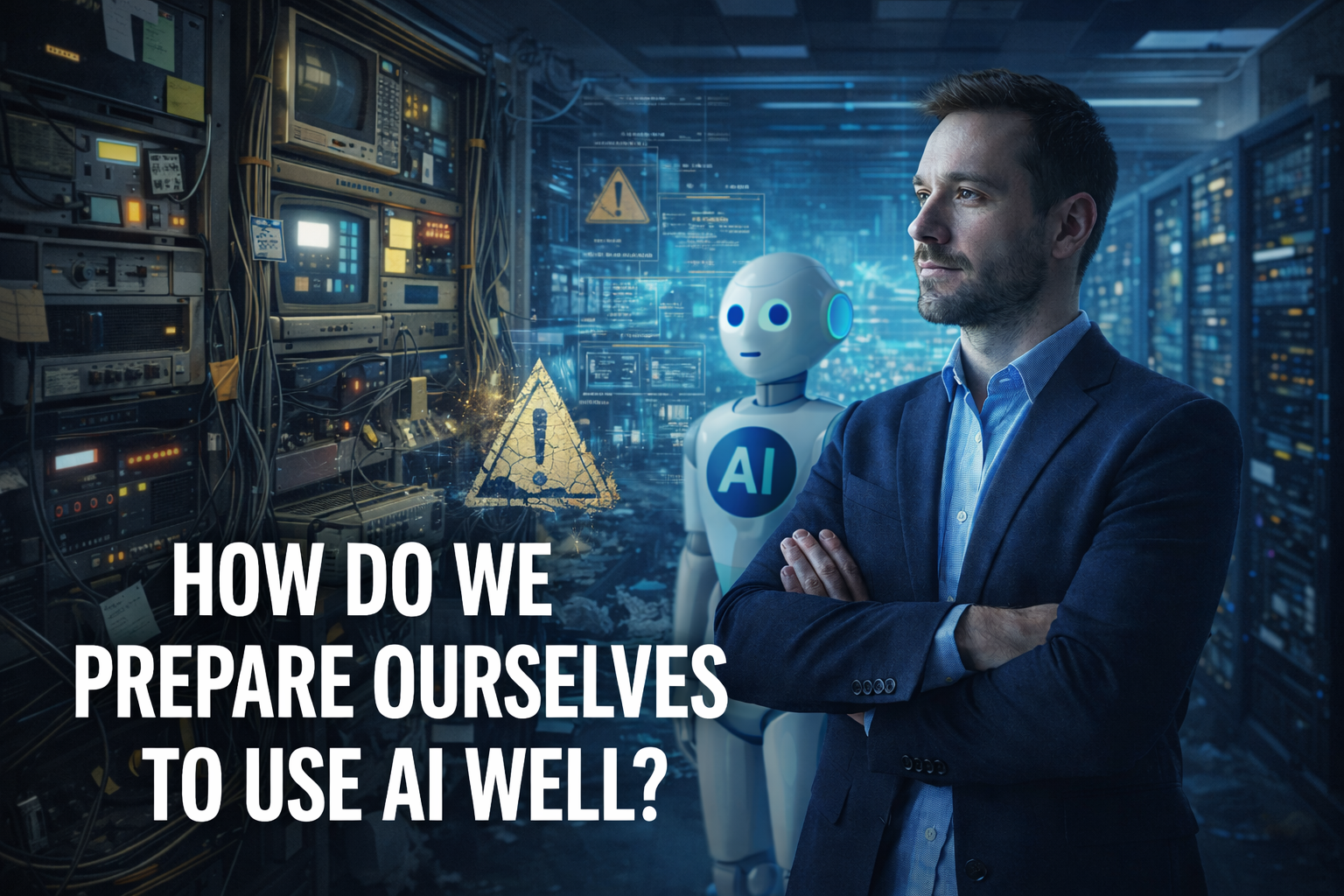
  • How do we prepare ourselves to use AI well?

    How do we prepare ourselves to use AI well?

    Generative AI has captured the spotlight, our imagination, and most notably funding from nearly every organization around the world. It has been positioned as the greatest innovation in human history by some of the world’s most successful and outspoken CEOs. While also being labeled an existential risk to humanity. There is no doubt that this technology has already begun to change how we live and work, and it stands poised to disrupt nearly everything we do going forward.

    Yet, despite all the excitement, I see a growing problem. Most companies large and small are not truly prepared to take advantage of AI’s potential. In fact, many are creating more risk than value in their rush to adopt it.

    Just as humans have evolved over thousands of years, Our systems, infrastructures, and institutions have also evolved with us. Our electrical grids, business processes, data storage systems, and communication networks are the result of decades sometimes centuries of incremental development. Each generation built on top of the last. Artificial intelligence is no different. It rests on this accumulated foundation.

    And that foundation, in many cases, is the weakest link standing between world-changing innovation and systemic failure.

    The Rush to the “Solution”

    To understand how we got here, we need to look at our own behavior.

    A few years ago, generative AI made its public debut and took the world by storm. It captured our imagination almost instantly. Suddenly, we had access to tools that could write, code, analyze, and create at levels that once seemed impossible.

    This technology was introduced by a young company that was deeply focused on building something powerful but not necessarily on defining a specific, narrow problem it was meant to solve. Instead, they created a general-purpose tool that could “do it all,” even if no one yet knew exactly how it would be used.

    This was not a problem or a flaw. It was part of the appeal.

    They weren’t selling to our current operational realities. They were selling to our human imagination.

    The world responded accordingly.

    Over the next few years, organizations everywhere tried to fit “the solution” into every problem. Marketing. Compliance. Customer service. Software development. Strategy. HR. Finance. You name it AI was trying to be applied to it.

    Some teams saw early successes. While others struggled. Most fell somewhere in between.

    And despite the headlines, the true return on investment for AI remains unclear in many industries. Although technology leaders continue to pound the drums advocating for complete adoption.

    The Real Problem: Foundations, Not Imagination

    The issue is not that generative AI is a fantasy that can never be adopted.

    The issue is far more mundane and far more difficult to solution.

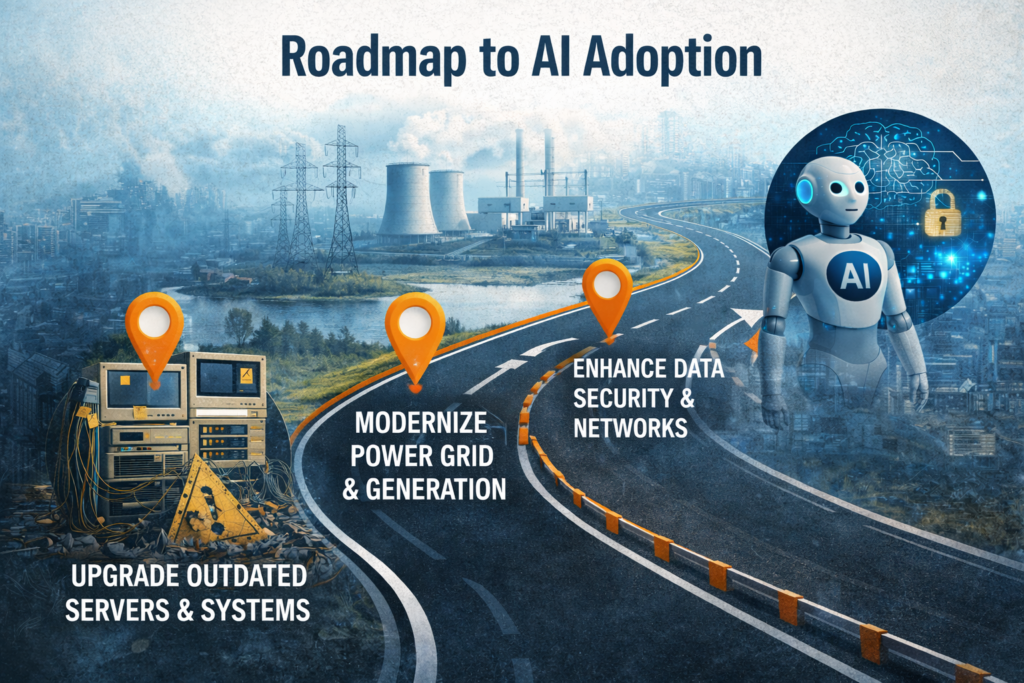
    We have massive data, architecture, and infrastructure problems that must be solved before AI can truly deliver on its promise.

    Our current reality is not limited by our tools.

    It is limited by our past.

    By decades of shortcuts.
    By postponed upgrades.
    By temporary fixes that became permanent.
    By systems layered on top of systems.
    By problems pushed forward “until later.”

    Now, later has arrived.

    The data bill is on the table, and it must be paid.

    Before we can fully unlock the future our imaginations are already racing toward, we must deal with the technical debt, fragmentation, and complexity we’ve accumulated over time.

    Without doing this work, AI becomes less of a breakthrough and more of a multiplier of existing dysfunction.

    Inside the Average Organization

    Consider the average company that has been operating for ten, twenty, or fifty years.

    Its technology environment is rarely clean.

    Instead, it is usually a patchwork:

    • Legacy systems built decades ago
    • Proprietary platforms customized beyond recognition
    • Modern cloud tools layered on top
    • Manual workarounds developed by employees
    • Institutional knowledge stored in people’s heads

    These environments “work” largely because humans serve as the connectors, translators, and repair technicians when things break.

    Employees know which system talks to which.
    They know which spreadsheet fixes which report.
    They know which process only works on Tuesdays.

    This human glue holds everything together.

    Now, organizations are trying to plug generative AI into this environment.

    An environment held together by digital duct tape and virtual twist ties.

    It’s no surprise this is proving difficult.

    The Pressure to Perform Innovation

    At the executive level, another dynamic is at play: perception.

    Leaders are under enormous pressure to appear innovative.

    Customers expect it.
    Investors demand it.
    Boards ask about it.
    Competitors talk about it.

    So many organizations publicly declare that they are “leveraging AI” not because they truly are, but because they fear what it would mean if they weren’t.

    Innovation becomes a marketing message rather than an operational reality.

    Customer perception begins to drive strategy more than internal capability.

    And that is dangerous.

    True innovation does not begin with press releases.
    It begins in system design.
    In data governance.
    In process alignment.
    In infrastructure modernization.

    It begins at the ground floor.

    The Unpopular Work of Real Progress

    The Unpopular Work of Real Progress

    Real progress requires unglamorous work:

    • Cleaning up data
    • Standardizing systems
    • Retiring outdated platforms
    • Redesigning integrations
    • Documenting processes
    • Reducing complexity
    • Rebuilding architecture

    This is not exciting.

    It doesn’t generate headlines.
    It doesn’t inspire viral posts.
    It doesn’t impress investors in pitch decks.

    But it is essential.

    And it is expensive.

    At the same time that “shiny” AI technologies are absorbing massive amounts of capital, organizations are being asked to invest heavily in foundational upgrades. This creates tension.

    It’s much easier to buy a new AI tool than to reengineer twenty years of infrastructure.

    But without that work, the tool will never reach its potential.

    National Infrastructure Matters Too

    This challenge extends beyond individual companies.

    Nation-states face the same reality.

    Countries that want to lead in innovation must invest in:

    • Digital infrastructure
    • Energy reliability
    • Network resilience
    • Data security
    • Education systems
    • Regulatory clarity

    Modern AI systems cannot thrive in outdated environments.

    You cannot run next-generation intelligence on twentieth-century foundations.

    We have already seen that countries with strong infrastructure tend to become centers of innovation, entrepreneurship, and economic growth. Those without it fall behind.

    AI is an Amplifier for Better or Worse

    One of the most important truths about AI is this:

    It amplifies whatever environment it is placed in.

    If your systems are clean, aligned, and well-governed, AI can accelerate performance.

    If your systems are fragmented, outdated, and poorly documented, AI will accelerate chaos.

    It will highlight inconsistencies.
    It will magnify errors.
    It will expose weak governance.
    It will automate bad processes.

    AI does not fix broken foundations.

    It reveals them.

    The Path Forward

    If organizations want to move beyond hype and toward sustainable value, they must shift their focus.

    From:
    “How do we use AI?”

    To:
    “How do we prepare ourselves to use AI well?”

    That means:

    • Investing in data quality
    • Modernizing core systems
    • Simplifying architecture
    • Strengthening governance
    • Aligning technology with strategy
    • Building internal capability

    Only then does AI become a true strategic asset rather than a risky experiment.

    Final Thoughts

    Generative AI is real.
    Its potential is extraordinary.
    Its impact will be lasting.

    But it is not magic.

    It cannot overcome decades of neglected infrastructure.
    It cannot replace disciplined system design.
    It cannot compensate for fragmented data.

    The future will not be built by organizations that chase every new tool.

    It will be built by those willing to do the hard, foundational work first.

    By those who understand that sustainable innovation is not about moving fast alone but about building something strong enough to last.

    If you liked this article you might want to read this other one it focuses on things you can do to grow in a tech first world.

  • Growing in a Tech First World

    Growing in a Tech First World

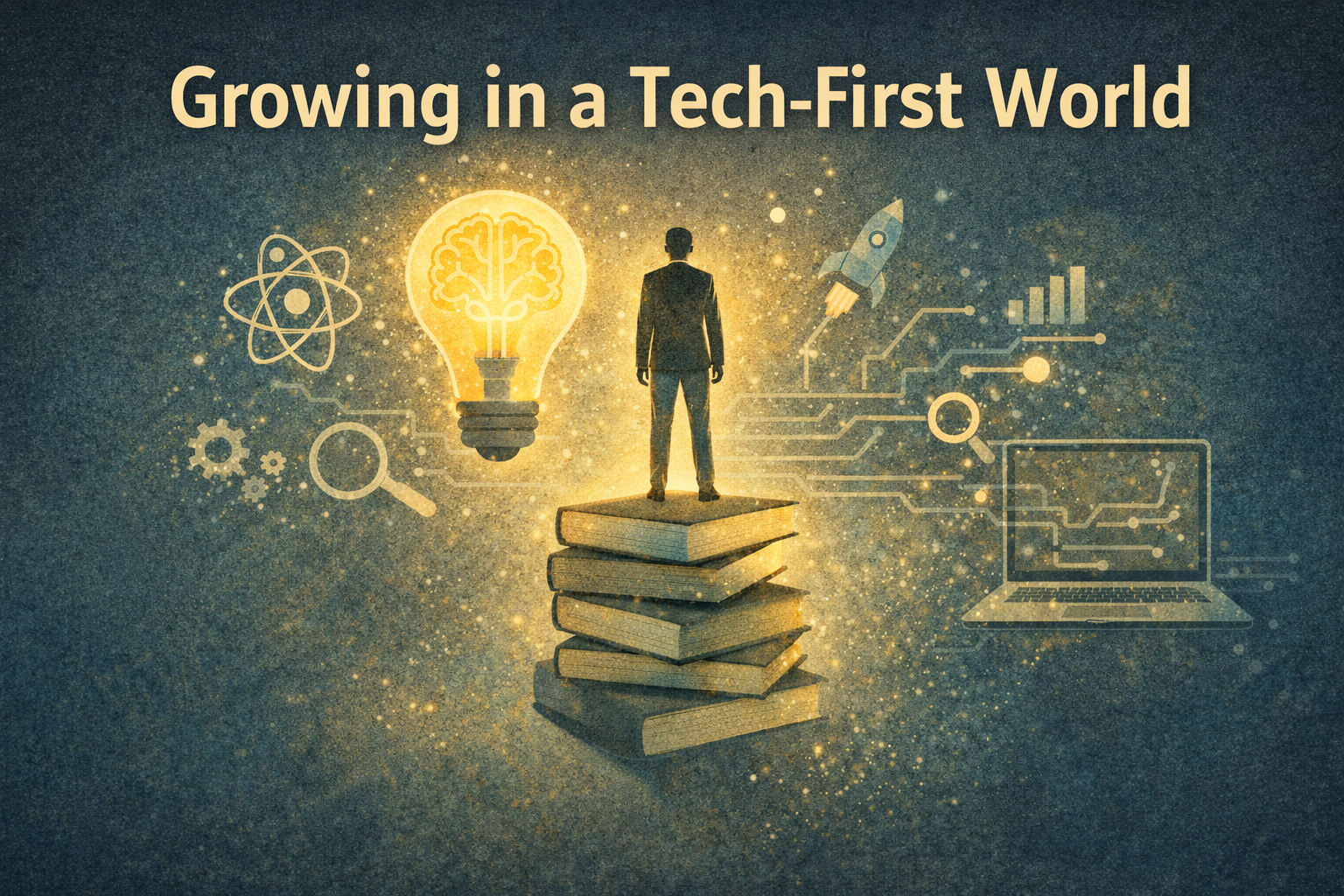
    With so many people worried about AI and what the job market will look like in the future, the best thing we can do is continue to upskill and fine-tune our current abilities. Let’s face it whether we like it or not, AI and productivity tools are here to stay. And so are humans (at least for the foreseeable future 😊).

    While many people focus on fear, those who want to stay relevant choose to adapt and learn. If humans are good at anything, it’s evolving with the present while shaping the future. That ability is how we’ve progressed, innovated, and built the world we live in today.

    If I were starting my career today, I would focus first on becoming a better communicator. I would ask myself: How can I better teach others? How can I clearly demonstrate the value I bring? I would invest time in refining my storytelling skills so I could break down complex processes and problems into simple, actionable insights.

    Strong communication builds trust. It gives key stakeholders confidence that they won’t be left behind or overwhelmed. This ability to connect, explain, and inspire is a powerful differentiator one that technology, especially AI, still struggles to replicate. AI can generate information, but it cannot truly connect ideas at a human level or build meaningful relationships the way people can.

    Alongside communication, I would also prioritize building strong technical skills. Understanding how technology works and just as importantly, what it can’t do is essential if you want to remain in control of the tools you use. The goal is to become a master of technology, not to let technology master you.

    All technology should be viewed as an augmentation tool, not a replacement tool. In other words, you should never outsource your thinking. Instead, use technology to challenge your ideas, pressure-test your assumptions, and push yourself to think more deeply. Question the outputs. Seek to understand the reasoning behind results. Decide for yourself where you stand. This mindset keeps you learning, growing, and discovering new opportunities over time.

    While some outspoken tech leaders argue that humans are the weakest link in productivity, I believe the opposite is true. Our greatest strengths lie in our ability to create, imagine, empathize, and connect. These are qualities that cannot be easily automated or replicated.

    If we continue to lean into those strengths while responsibly leveraging technology, we can build a future where humans and AI work together in powerful ways, one where innovation thrives, careers evolve, and people continue to find purpose and impact in their work.

    The future doesn’t belong to machines alone. It belongs to those who are willing to learn, adapt, and lead alongside them.

    Actions to Take NOW

    If you want to future-proof yourself, don’t wait for permission or the “perfect time.” Start taking small, intentional steps today:

    • Connect with those around you at work and in life.
      Have real conversations about what you’re learning, what you’re trying, and where you’re struggling. Growth accelerates when it’s shared.
    • Experiment with new tools regularly.
      Try one new AI or productivity tool each month. Document how you use it, what works, and what doesn’t. Turn curiosity into a habit.
    • Be open about what you’re learning.
      Share your experiences with teammates and peers. Let them know what’s helped you and how it’s improved your work. Your insights may unlock progress for others.
    • Listen to understand, not just to respond.
      Ask how others are using technology. Learn from their perspectives. Every conversation is an opportunity to expand your thinking.
    • Reflect and refine.
      Set aside time each month to ask: What did I learn? What did I improve? What should I try next? Growth is intentional, not accidental.

    Small, consistent actions today compound into massive opportunities tomorrow.

  • The Future of Humanity is Still Human

    The Future of Humanity is Still Human

    Technology doesn’t scare me.

    I’ve never been afraid of losing my place in the world to a machine, and here’s why: no matter how advanced computers become, they will never be able to replicate the imagination, passion, and ingenuity of a person chasing down a problem that truly matters to them.

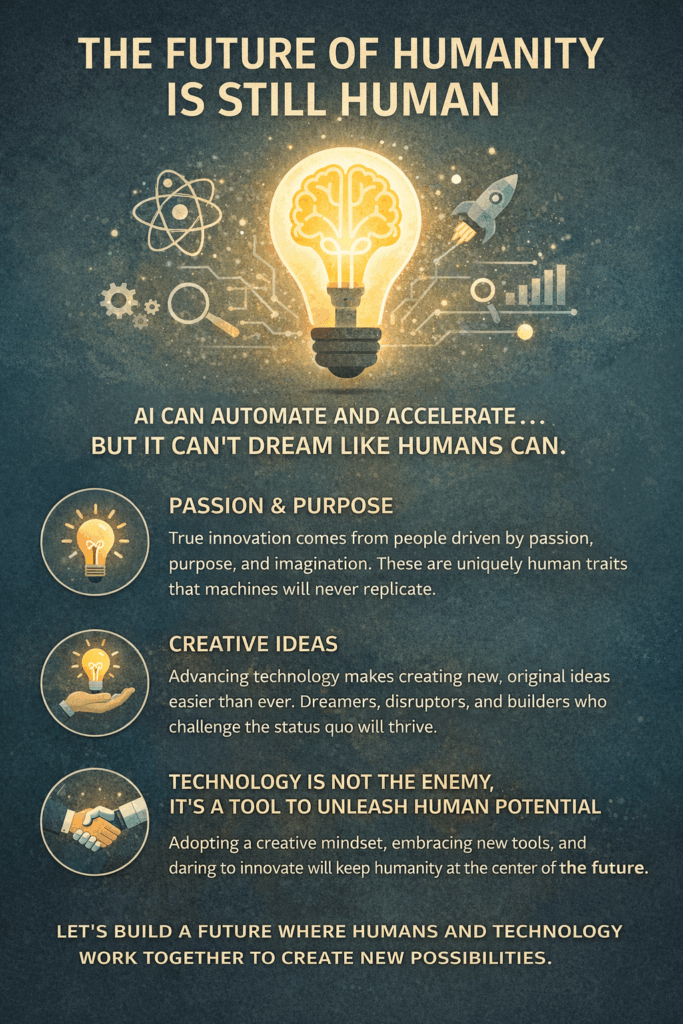
    Machines can analyze, automate, and accelerate but they cannot dream. They can’t yearn, nor can they deeply care. At least not in the way humans do. Passion and purpose are still uniquely human traits and they remain at the heart of all meaningful innovations.

    The Spark That Machines Lack

    We are living in a time where artificial intelligence and automation are evolving at breakneck speed. And yet, in that race to build faster, smarter systems, it seems like society has begun to lose something: our sense of originality.

    Movies are mostly sequels or reboots. “New” product releases are often just minor upgrades with marketing hype. Phones get a slightly better camera, and that’s considered innovation. But let’s be honest, that’s not innovation. That’s iteration.

    And this,this world of safe, recycled ideas is what AI is best positioned to replace.

    But those who dare to do things differently? Those who look at the way something has always been done and say, “We can do better”? The dreamers, the disruptors, the builders will be in demand in this new future. These are the individuals who will thrive.

    A Shift in the Creative Model

    If you want to stay relevant and not just survive but thrive you must start learning how to see the world not as it is, but as it could be.

    For decades, creation at scale was reserved for massive corporations. To bring an idea to life, you needed funding, infrastructure, and an army of employees. So most people, even the most creative ones, stepped into narrow roles to support someone else’s vision.

    But that world is changing.

    Today, thanks to the democratization of technology, the barriers to creation are lower than ever. A person with a product idea can prototype it using 3D printing. Artists can design merchandise and print it only when someone orders. You no longer need to build a factory you need an idea, access to the right tools, and the courage to act.

    We are living in an era where you don’t need to wait for permission. You don’t need a massive team. You just need a spark.

    And we need to remember that we can still be the ones holding the match.

    Technology Is Not the Enemy

    Let this be a wake-up call: Technology is not here to replace us. It’s here to elevate us.

    AI can do one of two things:

    • It can destroy our sense of purpose by taking over task’s others assigned us…
    • Or it can liberate us to chart our own course, solve problems we truly care about, and create things the world has never seen.

    The difference lies in mindset.

    If you define your value by your ability to follow instructions or complete repetitive tasks, the future will feel threatening. But if your value comes from your perspective, your creativity, your unique way of seeing the world then AI becomes your amplifier, not your rival.

    The Challenge Ahead

    This shift won’t be easy. It will be uncomfortable. It will force us to reimagine what “work” means, and it will challenge every assumption we’ve held about how careers are supposed to work.

    But it will also open the door for many who’ve long felt stuck in the grind.

    We’re entering a new age where the power to build, launch, and scale ideas no longer belongs solely to the privileged few. The tools of innovation are now within reach. But the real question is do you still believe you can innovate?

    Can you let go of what’s always been and embrace what could be?

    Because the future is still human. It always has been.

    And it needs those humans now more than ever.

  • Generative AI Won’t Replace Us, It Will Set Us Free

    Generative AI Won’t Replace Us, It Will Set Us Free

    I’ve been experimenting with generative AI since 2020, and I have to say the progress we’ve seen in just a few short years is amazing. The things this technology can do today were almost unthinkable when I started using those early models.

    I remember trying to get one of the early language models to help me build a simple “to-do list” application. It struggled to say the least. It didn’t really understand what I was aiming for, and to be honest, I had to hold its “hand” through every step of the process. I had to break things down, ask very specific questions, and already have a decent amount of subject knowledge myself. Back then, these models were mostly glorified search engines with a friendlier user interface great for ideas, but not quite partners in development.

    But things began to change and over the years the models advanced, today these tools can really step up as a partner and even co-founders.

    Over time, the interaction became less about guiding the AI and more about collaborating with it. I no longer needed to write most of the code myself or formulate perfectly-worded prompts. Today, I can build a far more advanced version of that original app in just a few hours, something that took weeks in 2020 with the original AI models I began working with. This is the type of leap in productivity that makes headlines scream about the future of jobs being at risk. And to be honest, I get it! I understand why some are sounding the alarms.

    But here’s the thing: if you’re looking at the future of work through the same lens you used five or ten years ago, then yes, it’s going to feel terrifying. Of course, AI seems like a threat. After all, we no longer need interns and junior analyst spending hours manually cleaning datasets or scouring spreadsheets for “leading spaces” in cells (if you’ve ever done this task, you know the soul-sucking pain I’m talking about).

    Let’s break down the problem, opportunities for those willing to learn, review two examples, and talk about what mindset will lead the future.

    The Real Problem How we View Entry-level Work Needs to Change!

    One of the most repeated criticisms I hear is that generative AI will eliminate “rite of passage” tasks the mundane early-career grunt work that, supposedly, teaches many things. But the truth is, of the things AI is replacing we learned very little other than to double-check everything and hit “save” obsessively (especially if you remember the horrors of the blue screen of death). I challenge the idea that mindless mundane tasks are a “rite of passage”. Because while those tasks may have taught us diligence, they didn’t exactly encourage innovation or creative thinking. In fact, they often stopped creativity in its tracks.

    Most of us dreaded the parts of the job where we had our heads buried in spreadsheets, massaging messy data into something usable. We looked forward to the days when we could analyze, problem-solve, and add value. That’s what we were excited about and ironically, that’s the part many never got to, because they burned out in the grind before they had the chance.

    The saddest part? That mind-numbing data cleanup process, done poorly and too quickly created lasting problems. Years later, many companies are sitting on mountains of inconsistent, poorly labeled, and unusable data because junior analysts weren’t incentivized to clean it properly. They wanted to move on to the “fun” stuff too quickly, and who could blame them?

    The Opportunity Ahead

    This is why I’m optimistic about the future with AI. If we use it correctly, we can eliminate meaningless tasks, free up brainpower, and give employees, especially new ones, the chance to start their careers doing meaningful, high-impact work.

    This is why I strongly believe AI shouldn’t replace entry-level employees it should augment them.

    Those junior analysts, associates and interns are still critical. They come in fresh. They have energy, idealism, and a drive to solve the “impossible.” The difference now is, they’ll actually have the bandwidth to try and do it.

    We are at a unique moment in history where everyone from the new hire to the 30-year veteran can and should be given a personal AI assistant. But not just any assistant. These tools need to be tailored to role and context. Some will act as mentors and guides, others as research analysts or organizational experts. Some will summarize meetings. Others will design workflows or analyze code. The possibilities are endless.

    A Tale of Two Companies: The AI Fork in the Road

    Let me walk you through a simplified example I’ve been thinking about lately. It’s not meant to be perfectly realistic, but it illustrates the stakes of leadership decisions in this new world:

    Company A has 100 employees and brings in $100 million in annual revenue, with 50% profit margins. Leadership sees an opportunity to automate low-level tasks and cut 25% of the workforce. Overhead drops, profits rise to $75 million, and shareholders celebrate.

    Sounds smart, right?

    Fast forward five years: the most experienced executives begin to retire. You promote mid-level managers, reorganize a bit, and add a few more automations to keep things running. But eventually, you hit a wall. There’s no bench strength. You’ve hollowed out your talent pipeline by eliminating the very roles that would’ve produced your future leaders.

    Now you’re hiring externally, people who don’t know your culture, your vision, or your values. Innovation slows. Morale suffers. What was once a winning strategy now feels like a short-sighted mistake.

    Company B same starting point takes a different approach.

    Instead of replacing people, leadership introduces AI across the organization with a clear message: This is here to help you, not replace you. Every employee gets access to tools designed to remove drudgery and unlock creativity. You involve the team in the design process. You ask them what they need. You build together.

    Now your 100-person team performs like a 200-person team. Productivity explodes. People are excited, not anxious. You start launching new products, entering new markets, and solving harder problems because your team isn’t burnt out, they’re inspired.

    Which company would you rather be a part of?

    The Infinite Growth Game

    This is what I call the infinite growth game and companies that figure this out will win the next decade. Not just because they use AI, but because they use it intentionally.

    The companies that view generative AI as a tool to eliminate headcount will see short-term gains and long-term decline. The companies that see AI as a lever for human potential will experience exponential growth not just in profit, but in culture, creativity, and resilience.

    Because when you give humans better tools, they don’t become obsolete, they become unleashed.

    What I Hope Every Leader Learns quickly

    I’ve said this before, and I’ll say it again: Generative AI is nothing more than an advanced tool. It reflects the person wielding it. If you use it to replace people, you’re playing a dangerous and unsustainable game. But if you use it to support them to clear the clutter, unlock bandwidth, and give space for innovation you’re giving your team a gift.

    We spent decades dreaming of technology that could help us “get more done.” That dream has now arrived.

    And here’s what we must remember: We didn’t want a tool that would replace us. We wanted a tool that would empower us. One that would help us solve harder problems and create amazing things.

    So let’s stop being afraid of the future.

    Let’s stop measuring productivity in terms of bodies and hours.

    Let’s stop thinking that the best use of AI is replacing entry-level employees with glorified spreadsheets that talk.

    Let’s build organizations where humans and machines work together not in opposition, but in harmony. Where experience is valued, but imagination is celebrated. Where tools make us more human, not less.

    Let’s build that future.

  • What is the Turing Test and What does it mean if AI beats it?

    What is the Turing Test and What does it mean if AI beats it?

    The “Turing Test” is a process of inquiry into machine intelligence to determine if a computer is capable of thinking like a human being. This test was developed and introduced to the world by Alan Turing, an English computer scientist in his 1950 paper titled “Computing Machinery and Intelligence”. The test’s objective was to determine if a machine would be able to exhibit intelligent behavior that was indistinguishable from that of a human. This method became the benchmark and the goal for artificial intelligence research with many computer scientists determined to be the ones who develop such intelligence.

    The test which was originally named “The Imitation Game” works as follows: A human is given the job of “interrogator” their job is to have a texted-based conversation with two participants a human and a computer. The “interrogators” goal is to determine which is the machine and which is the human. While the machine’s goal is to convince the “interrogator” that it is in fact human. If the “interrogator” fails to correctly identify which is the Artificial Intelligence, then the computer has successfully beaten the test which suggests it exhibits human-level intelligence.

    Over the years many have misunderstood this to mean that if an AI beats the test, then we have reached AGI (Artificial General Intelligence). Which is not accurate, the Turing test was intended in identifying a computer that exhibits human-level or human-like intelligence. AGI is a type of AI that possesses human-level cognitive abilities, including the ability to understand, learn, and apply knowledge across a wide range of tasks. Two very different things.  

    If an AI model is able to beat the Turing test it simply means we have been able to create a machine that can interact with a human and be very good at mimicking human likeness. This has massive implications for how future AI is developed and deployed in the world as some interactions previously thought to be uniquely human can be done by a machine. This does not mean that computers will be able to replace us as human interaction involves so much more than just intelligent communication.

  • Replaceable?  AI and Humanity

    Replaceable? AI and Humanity

    Over the past few days, I’ve seen a growing number of conversations suggesting that AI will soon replace humans in most tasks. Fields once thought to be protected from automation are now being targeted by AI companies. Recently, Bill Gates stated in an interview that within 10 years, AI could replace humans as doctors, teachers and more. He added that intelligence will become abundant and essentially free.

    But I believe this thinking is flawed.

    Gates assumes that what makes a great doctor or teacher is purely intelligence. But being effective in these roles requires far more than just intellect, it demands emotional connection, creativity, empathy, and the ability to innovate new approaches. A teacher’s ability to inspire or a doctor’s bedside manner are just as critical as raw intelligence. Intelligence has always been abundant. What’s truly scarce is opportunity and the space for intelligence to thrive, evolve, and make an impact.

    Bill Gates isn’t alone in these views. Elon Musk has made similar predictions recently, also suggesting that AI will replace humans within the next decade. As someone who is optimistic about the potential of AI and its ability to help us reach new heights, I find this narrative around replacement deeply troubling for two key reasons:

    1. It consolidates power into the hands of a few
      AI is ultimately software a tool created by humans. It can be manipulated, guided, and even biased by those who control it. If we hand over most decision-making and productivity to AI without clear safeguards, we risk speeding up a trend that’s already been growing: the concentration of power and influence among a small group of corporations.
    2. It underestimates human creativity and innovation
      AI can optimize, predict, and replicate but true innovation comes from challenging the norm, thinking differently, and imagining the unimaginable. If we remove humans from the equation, we risk stalling the very innovation we hope to accelerate.

    The conversation shouldn’t be about replacing humans with AI it should be about augmenting human capabilities through AI. AI is a powerful tool, and it’s only getting better. But so are humans. The true magic happens when we work together leveraging the strengths of both. By keeping humans in the loop, we also ensure ethical oversight, accountability, and a future grounded in our shared values.

    So, how can we prepare for a brighter future where humans and AI coexist and thrive together?

    1. Start learning the language of computers.
      Yes, learn to code. No, you don’t have to become a full-time developer. But understanding the basics of computer science and programming will help you grasp how AI learns and functions. It will empower you to collaborate with these tools more effectively. And the good news? You can use AI to help you learn.
    2. Invest in soft skills
      Communication, emotional intelligence, critical thinking, and problem-solving will remain essential. While some believe AI will eventually master these areas, we’re not there yet and even when we are, human connection will remain uniquely powerful. The way we relate to one another can’t be replicated by machines.
    3. Strengthen your critical thinking
      Don’t be afraid to question assumptions or challenge the status quo. Nearly all transformative innovations in history have come from those willing to think differently and ask “why not?”
  • Shadow AI 2025: Compliance Challenges and Strategic Solutions

    Shadow AI 2025: Compliance Challenges and Strategic Solutions

    Today, in the fast-evolving landscape of corporate technology, Shadow AI has emerged as a significant challenge. This term refers to AI systems developed and implemented within organizations without formal oversight or approval. While these initiatives might be well-intentioned and can drive innovation and efficiency, they also pose substantial risks, especially concerning compliance and security.

    The Compliance Challenge

    Shadow AI can inadvertently lead to violations of regulatory standards, particularly in sectors like finance and healthcare, where data handling and processing are stringently regulated. Unauthorized AI tools can conflict with GDPR, HIPAA, or other data protection regulations, risking severe penalties, including fines and reputational damage. This situation is further complicated by the varying regulations across different regions, requiring a nuanced approach to compliance. 

    We will begin to see an increase in shadow AI usage in 2025. Here are strategies to prepare for this inevitable wave and contain its potential downfalls while encouraging innovation and growth.

    Strategic Solutions for Shadow AI

    1. Establish Clear AI Governance 

    PoliciesOrganizations must create detailed AI governance frameworks that define who can develop AI applications and the processes for oversight. These policies should include criteria for data security, compliance checks, and the alignment of AI initiatives with overall business goals. By clearly outlining the rules and responsibilities, companies can prevent the unauthorized use of AI technologies and ensure that all applications meet enterprise standards.

    2. Enhance Transparency and Monitoring

    It is vital for organizations to establish strong monitoring systems that can detect the use of unauthorized AI tools. This involves regular audits and the use of AI inventory management systems that can track and evaluate all AI activities within the company. Such transparency not only helps in regulating the use of AI but also aids in assessing its effectiveness and alignment with business objectives.

    3. Foster a Culture of Compliance

    Creating a culture that prioritizes compliance involves educating all employees about the risks and implications of Shadow AI. Training programs should emphasize the importance of adhering to internal policies and external regulations. They should also encourage employees to report any unauthorized AI activities, ensuring that these issues can be addressed before they escalate.

    4. Provide the Right Tools and Resources

    To mitigate the root causes of Shadow AI, companies should provide their teams with approved, state-of-the-art AI tools that meet their needs. This reduces the temptation to use unauthorized technologies and ensures that all AI-driven activities are secure and compliant. Furthermore, providing adequate resources and support can accelerate the approval processes, reducing bottlenecks and frustrations that may lead to Shadow AI.

    5. Foster a Culture of Innovation

    Encouraging a culture of innovation is essential to harness the full potential of AI while mitigating the risks associated with Shadow AI. By promoting an environment where experimentation is valued and innovative ideas are rewarded, organizations can channel their employees’ creative energies into sanctioned and supervised AI projects. This approach helps prevent the formation of shadow AI by integrating innovation into the formal structure of the organization, thereby ensuring that all inventive efforts are aligned with corporate goals and compliance standards. It also empowers employees, giving them a platform to innovate within safe boundaries, which can lead to breakthroughs in productivity and efficiency.

    Conclusion:

    Effectively managing Shadow AI requires a balanced approach that encourages innovation while enforcing strict compliance and security measures. Establishing robust AI governance frameworks, enhancing transparency, fostering a compliance-oriented culture, and equipping teams with the right tools are fundamental steps that companies must take to harness the benefits of AI without falling into the compliance traps set by Shadow AI.To further prevent the development and use of Shadow AI, organizations should actively encourage experimentation with AI across all levels of the company. By creating a structured environment where employees can safely explore and innovate with AI technologies, companies can reduce the need for individuals to pursue unsanctioned projects. This controlled setting should provide clear pathways for approval and feedback, ensuring that all experimental use of AI aligns with corporate policies and regulatory requirements. Additionally, cultivating a culture where sharing results is the norm can significantly deter the proliferation of Shadow AI. When employees feel that their contributions to AI projects are recognized and valued, and when there is a transparent system for sharing successes and learnings, the allure of developing AI tools in the shadows diminishes. This culture of openness not only discourages unauthorized use but also fosters a collaborative environment that leverages collective intelligence to refine and enhance AI initiatives. Incorporating these strategies can lead to a more engaged workforce that is both innovative and compliant. By providing avenues for legitimate experimentation and promoting an open exchange of ideas, companies can harness the full potential of their workforce while minimizing risks. This proactive and strategic approach ensures that AI drives success in a secure and lawful manner, safeguarding the company from potential legal and ethical pitfalls and setting a benchmark in the industry for responsible AI use.

  • The Path Forward

    The Path Forward

    Generative AI is not a passing trend—it’s a transformative force with the power to fundamentally reshape industries, workflows, and how we approach innovation itself. While those are truly significant on their own its true potential lies in how humans choose to integrate and leverage it effectively. To thrive in this era of rapid advancement, businesses must navigate a delicate balance: fostering innovation while addressing critical challenges like privacy, transparency, and governance.

    Here are a few steps leaders can take to future-proof their businesses, and possibly gain the upper hand on their competitors.

    1. Fostering a Culture of Innovation

    Innovation begins with empowering employees at all levels of an organization to explore and experiment with generative AI. Companies that create safe spaces for experimentation—whether through pilot programs, dedicated innovation labs, or team-wide AI training initiatives—position themselves to unlock the full value of this technology. Encourage teams to identify inefficiencies in their workflows and think creatively about how AI can address them.

    For instance, consider a marketing team experimenting with AI to automate data analysis and ad targeting. By freeing up time previously spent on repetitive tasks, the team can focus on crafting more impactful campaigns and customer engagement strategies. Innovation is most successful when employees feel confident to test new ideas without fear of failure.

    2. Building Frameworks for Responsible Implementation

    While experimentation is vital, businesses must also provide clear and comprehensive frameworks for implementation. This involves setting policies that define acceptable use, data security standards, and compliance requirements. Governance frameworks should outline the roles and responsibilities of AI implementation teams, ensuring accountability and alignment with business goals.

    Additionally, businesses must evaluate AI tools carefully. Some technologies operate as “black boxes,” providing little insight into how decisions are made, while others prioritize explainability and transparency. Choosing tools that align with organizational values and industry standards is critical to fostering trust with both internal teams and external stakeholders.

    3. Prioritizing Privacy and Data Security

    Privacy and data security are non-negotiable in the adoption of generative AI. Organizations must be acutely aware of the implications of sharing sensitive data with AI systems, particularly when partnering with third-party providers like OpenAI, Google, or Microsoft. Transparency in data handling policies and compliance with privacy regulations such as GDPR or CCPA are critical to maintaining stakeholder trust.

    Businesses should implement privacy-first AI architectures, including techniques like federated learning, data anonymization, and secure multi-party computation, to minimize the risks of data exposure. Training employees on best practices for managing data ensures that everyone in the organization understands their role in maintaining privacy and security standards.

    4. Building Trust with Stakeholders

    Trust is the cornerstone of successful AI adoption. Customers, employees, and investors need assurance that generative AI is being used responsibly and ethically. Businesses should prioritize open communication about their AI strategies, detailing how these technologies are being used, how data is handled, and what measures are in place to ensure fairness and transparency.

    For example, a retail company using AI for personalized customer experiences can build trust by explaining how data is used to create tailored recommendations. Additionally, offering opt-out options for customers who prefer not to share their data demonstrates a commitment to respecting individual preferences.

    5. Preparing for Long-Term Adaptation

    Generative AI is not a one-time investment; it is a long-term journey that requires continuous learning and adaptation. Technologies will evolve, regulatory landscapes will shift, and customer expectations will change. Organizations must remain agile and proactive in refining their AI strategies.

    Encourage a mindset of lifelong learning among employees, providing them with opportunities to upskill and reskill in response to technological advancements. Leaders, too, must stay informed about emerging trends and regulatory developments, ensuring their organizations remain ahead of the curve.

    The future belongs to those who move quickly, adapt, and embrace the unknown. Generative AI presents an unparalleled opportunity to transform industries and redefine what is possible, but only for those willing to rise to the challenge. Leaders who prioritize innovation, implement responsible governance, and build trust with stakeholders will set the standard for what impactful AI adoption looks like.

    Remember all this requires bold action, thoughtful strategy, and a willingness to embrace change. While not all are ready for such bold moves those who are will benefit greatly.